
一、Plant Photosynthesis
Photosynthesis is the process by which plants, algae, and certain bacteria convert light energy into chemical energy, transforming carbon dioxide and water into organic compounds while releasing oxygen. Light plays an indispensable role in this process.
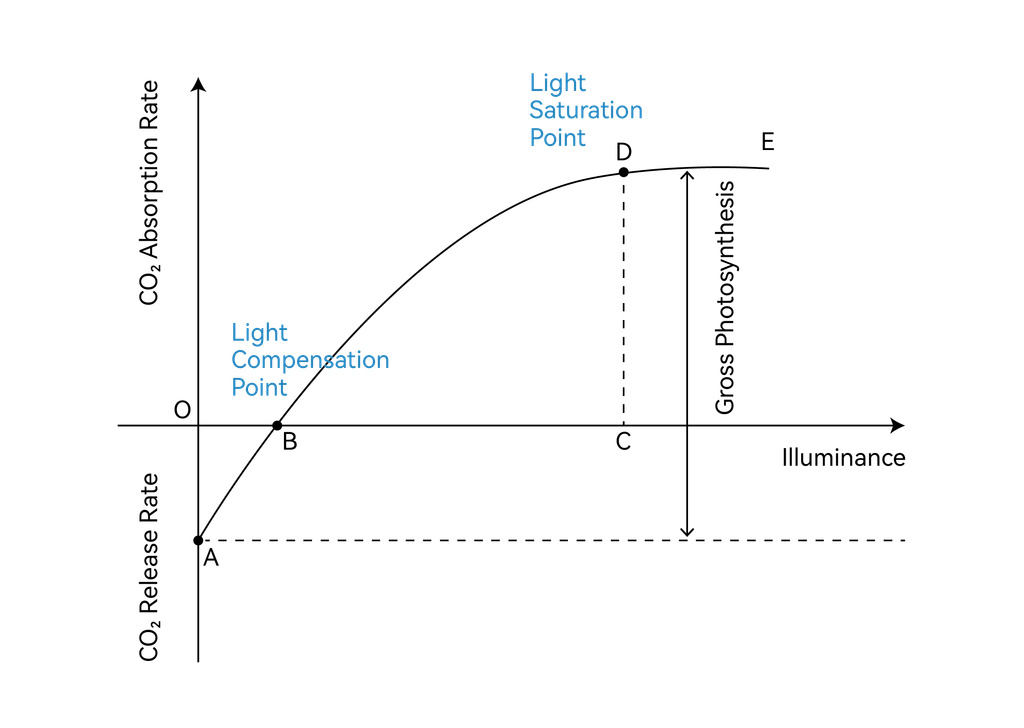
Two critical thresholds govern plant photosynthesis: the Light Compensation Point and the Light Saturation Point.
- Light Compensation Point: The light intensity at which the rate of CO₂ absorption through photosynthesis equals the rate of CO₂ release through respiration.
- Light Saturation Point: The light saturation point refers to the situation where the rate of plant photosynthesis increases with the increase of light intensity. However, when the light intensity increases to a certain extent, the photosynthesis rate no longer increases, and the light intensity at this time is the light saturation point.
Key Points in the Diagram:
- A: Zero light intensity—only respiration occurs.
- B: Photosynthetic rate equals respiratory rate (Light Compensation Point).
- C: Minimum light intensity required for maximum photosynthesis (Light Saturation Point).
- BD Segment: From this, it can be seen that in the BD section, the intensity of photosynthesis increases with the increase of light intensity, and the light intensity at this stage is more conducive to the photosynthesis of plants.
二、The Importance of PAR and PPFD
- PAR (Photosynthetically Active Radiation): The spectral range of solar radiation (400–700 nm) utilised by plants for photosynthesis.
- PPFD (Photosynthetic Photon Flux Density): Measures the density of PAR photons per unit area (μmol/m²/s).
- Higher PPFD values indicate greater energy absorption, directly correlating with stronger photosynthesis and healthier plant growth. PPFD is a vital metric for evaluating photosynthetic efficiency.
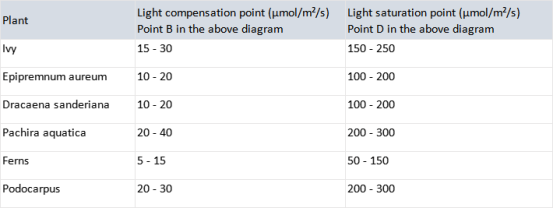
三、Light Compensation and Saturation Limits for Indoor Plants
四、EWINDOW Performance
EWINDOW replicate the spectral distribution of natural sunlight within the visible light range. Advanced optical technology allows them to simulate sunlight at different times of day, with dynamic spectra optimised for plant growth.
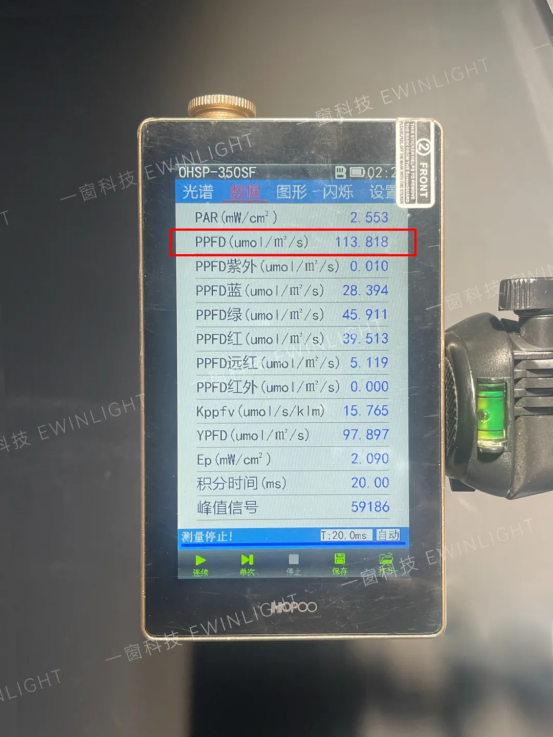
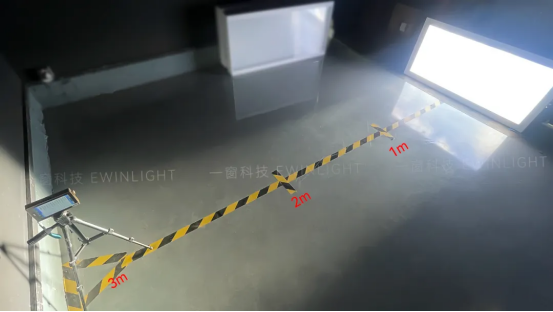
PPFD Test Results: At a 3-meter distance, EWINDOW deliver a PPFD of 113.818 μmol/m²/s in the critical BD segment. This ensures plants receive sufficient photosynthetic photons to maximise growth efficiency.
五、Practical Applications of the EWINDOW
Mayo Clinic
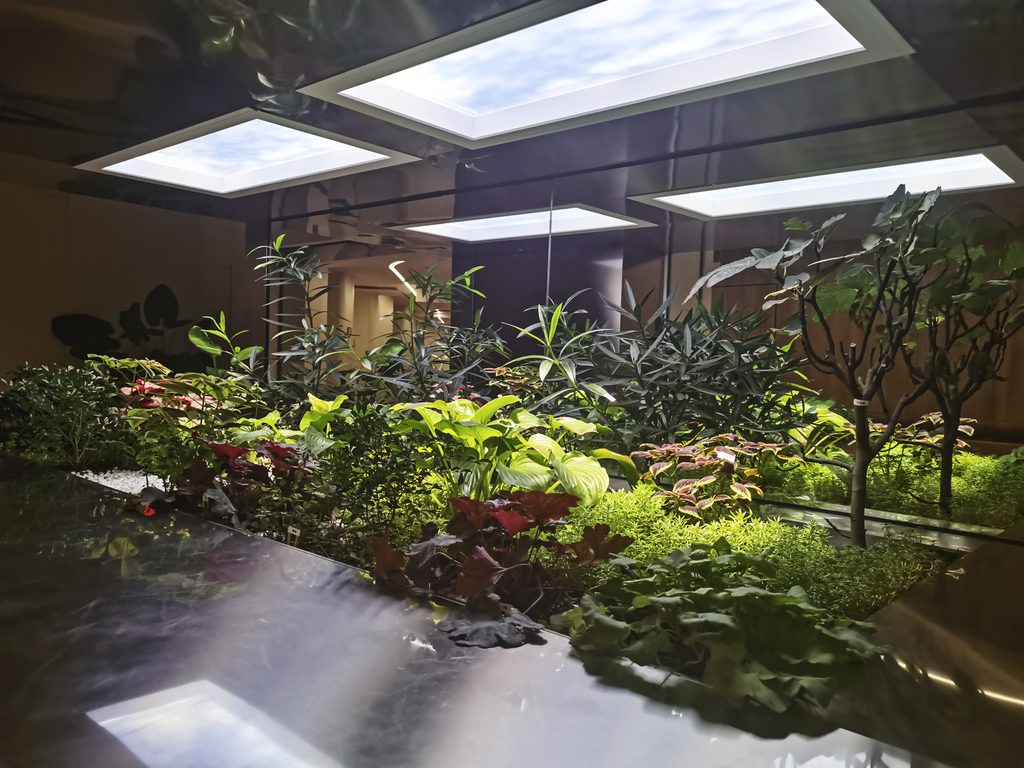
Developed jointly by the Health Commission of Dongcheng District and Jingyi Hesheng Hospital Management Company in 2020, this high-end integrated traditional Chinese and Western medicine outpatient clinic sits within COFCO Plaza, Jianguomen, Beijing. To guarantee suitable lighting in the medicinal herb planting zone, EWINDOW’s Nature Connect technology is adopted to improve herb survival. EWINDOW replicates near-natural growth conditions, supporting the healthy development of traditional Chinese medicinal herbs and retaining their medicinal potency.

Office
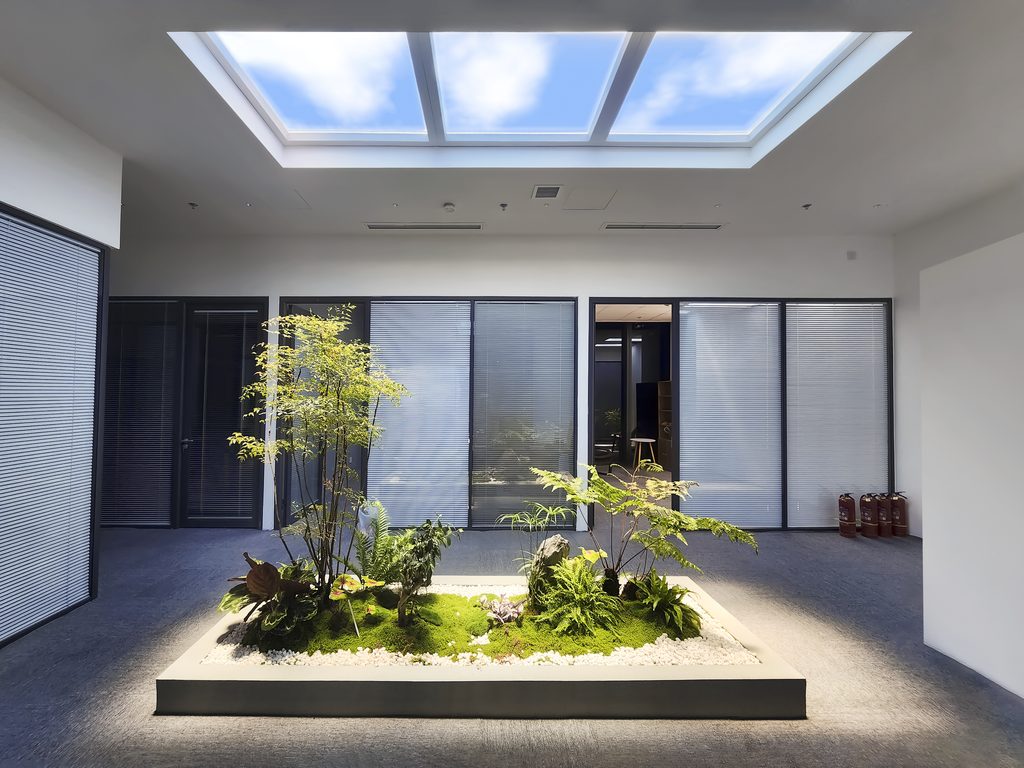
In an enclosed space, people always feel dull and depressed. Indoor landscaping is now a choice for more enclosed spaces. EWINDOW brings nature connect to life, transforming sterile office environments into vibrant spaces. Sunlight-like illumination bathes plants in warmth, while dynamic projections of drifting clouds create a refreshing, natural ambience.
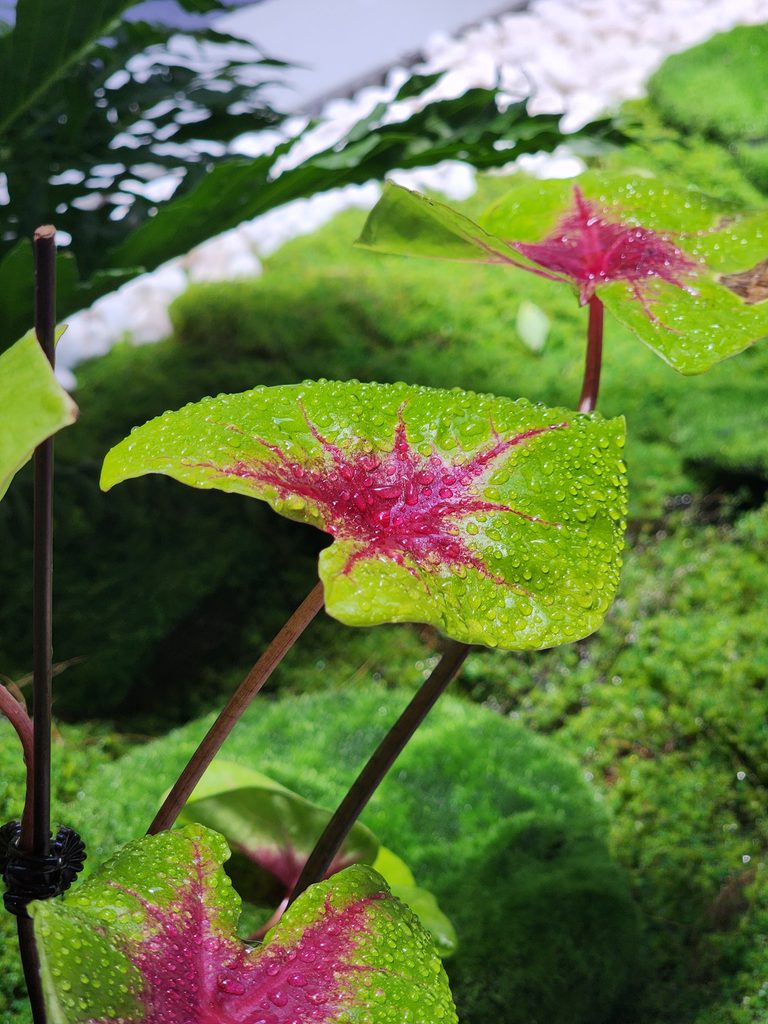

Conclusion: Light is pivotal for photosynthesis, but factors like temperature, CO₂ concentration, and moisture also influence plant health. Tailoring care to each species’ unique needs ensures robust growth. EWINDOW builds nature connect, bridging the gap between nature and indoor spaces, fostering thriving ecosystems where artificial and organic life coexist harmoniously.
Let’s reimagine indoor spaces with light that nurtures life!